Systems architecture: scaling at speed
Dominic Ashford
Editorial director

11 min read
Feb 4, 2026
We have moved from a scarcity of pixels to an abundance of possibilities. The next phase of synthetic media is not about rendering power — it is about Curatorial Velocity.
We are currently living through a Cambrian explosion of synthetic media. For the first time in human history, the marginal cost of visualizing an idea has dropped effectively to zero. We have transitioned overnight from a regime of scarcity—where every pixel cost time, money, and labor—to a regime of overwhelming abundance.
But abundance brings its own form of paralysis.
The Crisis of Taste
When you can generate anything, the most paralyzing question becomes: What should you generate? The barrier to entry for high-fidelity visuals has evaporated. The challenge for the modern creative is no longer technical execution. The AI handles the rendering, the subsurface scattering, the volumetric lighting, and the texture mapping. The machine has mastered the "How."
This leaves the human with the burden of the "Why." The challenge is now purely intellectual. It is a crisis of taste. In a marketplace flooded with infinite, technically perfect, soul-less imagery, the value of an image is no longer defined by the difficulty of its creation, but by the specificity of its intent.
Signal vs. Noise
The Noise: The deluge of generic, hyper-polished, "mid-journey" aesthetics that flood social feeds.
The Signal: The singular, arrested image that demonstrates a distinct point of view.
The future belongs to those who can filter the signal from the noise.
The Architecture of Restraint
In a world drowning in noise, silence is the ultimate luxury. Restraint is the new indicator of sophistication.
The novice prompter seeks complexity. They operate under the mistaken belief that more is more. They pile on keywords, modifiers, camera settings, and stylistic references until the resulting image is a baroque mess of conflicting details—technically impressive, but aesthetically hollow.
The master, however, seeks the essence.
The Philosophy of Subtraction
Our approach is grounded in the wisdom of Antoine de Saint-Exupéry:
"Perfection is achieved, not when there is nothing more to add, but when there is nothing left to take away."
This philosophy is the cornerstone of the Visia Protocol. We believe that the most powerful images are not the ones that scream for attention, but the ones that whisper. They rely on:
Negative Space: Allowing the composition to breathe.
Confident Composition: Resisting the urge to fill every corner of the frame.
Singular Intent: Focusing on one emotional truth per image.
True luxury is not about excess; it is about the confidence to remove the unessential.
The Shift: From "Maker" to "Editor"
The fundamental role of the designer is undergoing a tectonic shift. We are no longer just "makers" laboring over every brushstroke. We are becoming "editors" and "directors."
The AI provides the raw material—the digital marble—and our job is to carve away the excess to reveal the statue inside. This shift requires a completely new hierarchy of skills.
The New High-End Skill Stack
To operate at the highest level of generative media, one must cultivate the following:
A. Semantic Precision
The ability to articulate visual concepts in language with absolute clarity. The difference between a "good" output and a "transcendent" output often lies in a single, precisely chosen adjective. It is poetry as code.
B. Curatorial Velocity
This is the metric of the future. It is the speed at which a creative director can scan a grid of 100 generated iterations and instantly identify the one that contains the spark of life. It is the ability to reject the "good" in service of the "exceptional."
C. Visual Literacy
The model is trained on the history of art, but it lacks context. A human editor must possess a deep understanding of art history, cinema, and design principles to guide the model away from generic aesthetics and toward culturally resonant imagery.
The Protocol for High-Fidelity Output
To achieve an "Editorial" look—one that rivals the pages of Vogue or Architectural Digest—in a generative workflow, one must violently abandon the default settings.
The "default AI look" is distinct and recognizable:
Over-Polished: Surfaces are too smooth, lacking the tactility of the real world.
Hyper-Saturated: Colors are calibrated for maximum engagement, not realism.
Centrally Composed: Subjects are perfectly framed in a way that feels robotic.
Introducing Friction
To break this pattern, the Visia Protocol introduces "friction" into the generation process. We do not want the model to take the path of least resistance. We want it to struggle, just enough to produce something raw.
We force the model into the margins of its latent space. We demand:
Film Grain: To break up the digital smoothness.
Motion Blur: To imply the passage of time and the imperfection of the shutter.
Lens Artifacts: Chromatic aberration and soft focus that mimic the physics of real glass.
The Human Imperfection
It is in these imperfections that we find the "Signal." A perfectly rendered face looks like a database entry. A face half-obscured by shadow, slightly out of focus, with a stray hair catching the light—that looks like a memory.
The future of AI is not in replicating reality perfectly, but in interpreting it with a distinct, human point of view.
Conclusion: The Lens and The Visionary
We must stop confusing the tool with the artist.
The AI model is not the artist. The AI model is the lens. It is a piece of glass—incredibly complex, capable of bending light in impossible ways—but it is still just glass.
Just as a Leica requires a photographer to frame the shot, measure the light, and choose the moment to press the shutter, a generative model requires a Visionary.
It requires someone to frame the prompt.
It requires someone to curate the output.
It requires someone to say "No" a thousand times, so that the one "Yes" truly matters.
The era of the technician is fading. The future belongs to the editors.
We have moved from a scarcity of pixels to an abundance of possibilities. The next phase of synthetic media is not about rendering power — it is about Curatorial Velocity.
We are currently living through a Cambrian explosion of synthetic media. For the first time in human history, the marginal cost of visualizing an idea has dropped effectively to zero. We have transitioned overnight from a regime of scarcity—where every pixel cost time, money, and labor—to a regime of overwhelming abundance.
But abundance brings its own form of paralysis.
The Crisis of Taste
When you can generate anything, the most paralyzing question becomes: What should you generate? The barrier to entry for high-fidelity visuals has evaporated. The challenge for the modern creative is no longer technical execution. The AI handles the rendering, the subsurface scattering, the volumetric lighting, and the texture mapping. The machine has mastered the "How."
This leaves the human with the burden of the "Why." The challenge is now purely intellectual. It is a crisis of taste. In a marketplace flooded with infinite, technically perfect, soul-less imagery, the value of an image is no longer defined by the difficulty of its creation, but by the specificity of its intent.
Signal vs. Noise
The Noise: The deluge of generic, hyper-polished, "mid-journey" aesthetics that flood social feeds.
The Signal: The singular, arrested image that demonstrates a distinct point of view.
The future belongs to those who can filter the signal from the noise.
The Architecture of Restraint
In a world drowning in noise, silence is the ultimate luxury. Restraint is the new indicator of sophistication.
The novice prompter seeks complexity. They operate under the mistaken belief that more is more. They pile on keywords, modifiers, camera settings, and stylistic references until the resulting image is a baroque mess of conflicting details—technically impressive, but aesthetically hollow.
The master, however, seeks the essence.
The Philosophy of Subtraction
Our approach is grounded in the wisdom of Antoine de Saint-Exupéry:
"Perfection is achieved, not when there is nothing more to add, but when there is nothing left to take away."
This philosophy is the cornerstone of the Visia Protocol. We believe that the most powerful images are not the ones that scream for attention, but the ones that whisper. They rely on:
Negative Space: Allowing the composition to breathe.
Confident Composition: Resisting the urge to fill every corner of the frame.
Singular Intent: Focusing on one emotional truth per image.
True luxury is not about excess; it is about the confidence to remove the unessential.
The Shift: From "Maker" to "Editor"
The fundamental role of the designer is undergoing a tectonic shift. We are no longer just "makers" laboring over every brushstroke. We are becoming "editors" and "directors."
The AI provides the raw material—the digital marble—and our job is to carve away the excess to reveal the statue inside. This shift requires a completely new hierarchy of skills.
The New High-End Skill Stack
To operate at the highest level of generative media, one must cultivate the following:
A. Semantic Precision
The ability to articulate visual concepts in language with absolute clarity. The difference between a "good" output and a "transcendent" output often lies in a single, precisely chosen adjective. It is poetry as code.
B. Curatorial Velocity
This is the metric of the future. It is the speed at which a creative director can scan a grid of 100 generated iterations and instantly identify the one that contains the spark of life. It is the ability to reject the "good" in service of the "exceptional."
C. Visual Literacy
The model is trained on the history of art, but it lacks context. A human editor must possess a deep understanding of art history, cinema, and design principles to guide the model away from generic aesthetics and toward culturally resonant imagery.
The Protocol for High-Fidelity Output
To achieve an "Editorial" look—one that rivals the pages of Vogue or Architectural Digest—in a generative workflow, one must violently abandon the default settings.
The "default AI look" is distinct and recognizable:
Over-Polished: Surfaces are too smooth, lacking the tactility of the real world.
Hyper-Saturated: Colors are calibrated for maximum engagement, not realism.
Centrally Composed: Subjects are perfectly framed in a way that feels robotic.
Introducing Friction
To break this pattern, the Visia Protocol introduces "friction" into the generation process. We do not want the model to take the path of least resistance. We want it to struggle, just enough to produce something raw.
We force the model into the margins of its latent space. We demand:
Film Grain: To break up the digital smoothness.
Motion Blur: To imply the passage of time and the imperfection of the shutter.
Lens Artifacts: Chromatic aberration and soft focus that mimic the physics of real glass.
The Human Imperfection
It is in these imperfections that we find the "Signal." A perfectly rendered face looks like a database entry. A face half-obscured by shadow, slightly out of focus, with a stray hair catching the light—that looks like a memory.
The future of AI is not in replicating reality perfectly, but in interpreting it with a distinct, human point of view.
Conclusion: The Lens and The Visionary
We must stop confusing the tool with the artist.
The AI model is not the artist. The AI model is the lens. It is a piece of glass—incredibly complex, capable of bending light in impossible ways—but it is still just glass.
Just as a Leica requires a photographer to frame the shot, measure the light, and choose the moment to press the shutter, a generative model requires a Visionary.
It requires someone to frame the prompt.
It requires someone to curate the output.
It requires someone to say "No" a thousand times, so that the one "Yes" truly matters.
The era of the technician is fading. The future belongs to the editors.
We have moved from a scarcity of pixels to an abundance of possibilities. The next phase of synthetic media is not about rendering power — it is about Curatorial Velocity.
We are currently living through a Cambrian explosion of synthetic media. For the first time in human history, the marginal cost of visualizing an idea has dropped effectively to zero. We have transitioned overnight from a regime of scarcity—where every pixel cost time, money, and labor—to a regime of overwhelming abundance.
But abundance brings its own form of paralysis.
The Crisis of Taste
When you can generate anything, the most paralyzing question becomes: What should you generate? The barrier to entry for high-fidelity visuals has evaporated. The challenge for the modern creative is no longer technical execution. The AI handles the rendering, the subsurface scattering, the volumetric lighting, and the texture mapping. The machine has mastered the "How."
This leaves the human with the burden of the "Why." The challenge is now purely intellectual. It is a crisis of taste. In a marketplace flooded with infinite, technically perfect, soul-less imagery, the value of an image is no longer defined by the difficulty of its creation, but by the specificity of its intent.
Signal vs. Noise
The Noise: The deluge of generic, hyper-polished, "mid-journey" aesthetics that flood social feeds.
The Signal: The singular, arrested image that demonstrates a distinct point of view.
The future belongs to those who can filter the signal from the noise.
The Architecture of Restraint
In a world drowning in noise, silence is the ultimate luxury. Restraint is the new indicator of sophistication.
The novice prompter seeks complexity. They operate under the mistaken belief that more is more. They pile on keywords, modifiers, camera settings, and stylistic references until the resulting image is a baroque mess of conflicting details—technically impressive, but aesthetically hollow.
The master, however, seeks the essence.
The Philosophy of Subtraction
Our approach is grounded in the wisdom of Antoine de Saint-Exupéry:
"Perfection is achieved, not when there is nothing more to add, but when there is nothing left to take away."
This philosophy is the cornerstone of the Visia Protocol. We believe that the most powerful images are not the ones that scream for attention, but the ones that whisper. They rely on:
Negative Space: Allowing the composition to breathe.
Confident Composition: Resisting the urge to fill every corner of the frame.
Singular Intent: Focusing on one emotional truth per image.
True luxury is not about excess; it is about the confidence to remove the unessential.
The Shift: From "Maker" to "Editor"
The fundamental role of the designer is undergoing a tectonic shift. We are no longer just "makers" laboring over every brushstroke. We are becoming "editors" and "directors."
The AI provides the raw material—the digital marble—and our job is to carve away the excess to reveal the statue inside. This shift requires a completely new hierarchy of skills.
The New High-End Skill Stack
To operate at the highest level of generative media, one must cultivate the following:
A. Semantic Precision
The ability to articulate visual concepts in language with absolute clarity. The difference between a "good" output and a "transcendent" output often lies in a single, precisely chosen adjective. It is poetry as code.
B. Curatorial Velocity
This is the metric of the future. It is the speed at which a creative director can scan a grid of 100 generated iterations and instantly identify the one that contains the spark of life. It is the ability to reject the "good" in service of the "exceptional."
C. Visual Literacy
The model is trained on the history of art, but it lacks context. A human editor must possess a deep understanding of art history, cinema, and design principles to guide the model away from generic aesthetics and toward culturally resonant imagery.
The Protocol for High-Fidelity Output
To achieve an "Editorial" look—one that rivals the pages of Vogue or Architectural Digest—in a generative workflow, one must violently abandon the default settings.
The "default AI look" is distinct and recognizable:
Over-Polished: Surfaces are too smooth, lacking the tactility of the real world.
Hyper-Saturated: Colors are calibrated for maximum engagement, not realism.
Centrally Composed: Subjects are perfectly framed in a way that feels robotic.
Introducing Friction
To break this pattern, the Visia Protocol introduces "friction" into the generation process. We do not want the model to take the path of least resistance. We want it to struggle, just enough to produce something raw.
We force the model into the margins of its latent space. We demand:
Film Grain: To break up the digital smoothness.
Motion Blur: To imply the passage of time and the imperfection of the shutter.
Lens Artifacts: Chromatic aberration and soft focus that mimic the physics of real glass.
The Human Imperfection
It is in these imperfections that we find the "Signal." A perfectly rendered face looks like a database entry. A face half-obscured by shadow, slightly out of focus, with a stray hair catching the light—that looks like a memory.
The future of AI is not in replicating reality perfectly, but in interpreting it with a distinct, human point of view.
Conclusion: The Lens and The Visionary
We must stop confusing the tool with the artist.
The AI model is not the artist. The AI model is the lens. It is a piece of glass—incredibly complex, capable of bending light in impossible ways—but it is still just glass.
Just as a Leica requires a photographer to frame the shot, measure the light, and choose the moment to press the shutter, a generative model requires a Visionary.
It requires someone to frame the prompt.
It requires someone to curate the output.
It requires someone to say "No" a thousand times, so that the one "Yes" truly matters.
The era of the technician is fading. The future belongs to the editors.
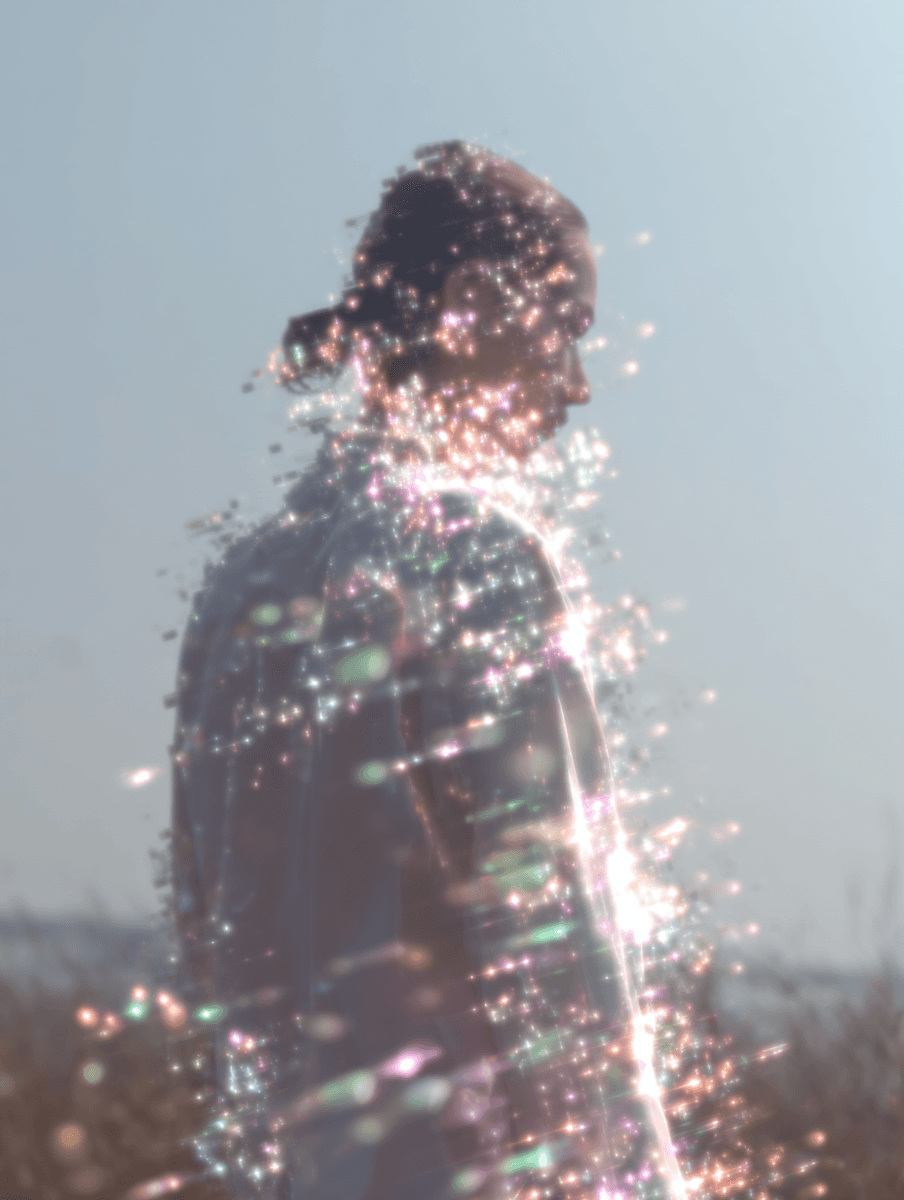
Cross the threshold. Enter the fold of uncompromising visionaries.
By submitting, you agree to our Terms and Privacy Policy.
Visual infrastructure for the relentless. A proprietary AI engine designed to materialize abstract vision into editorial-grade commercial assets.

Built in Framer by Vlad – Templates' Dad © 2026 All rights reserved.
Visual infrastructure for the relentless. A proprietary AI engine designed to materialize abstract vision into editorial-grade commercial assets.
Built in Framer by Vlad – Templates' Dad © 2026 All rights reserved.
Visual infrastructure for the relentless. A proprietary AI engine designed to materialize abstract vision into editorial-grade commercial assets.
Built in Framer by Vlad – Templates' Dad © 2026 All rights reserved.